
Planning a 2 Day Trip to Varanasi? Get a Personalized Itinerary & Local Support
Perfect schedule • Guided experiences • Hassle-free travel
Plan My Varanasi TripWant help customizing this itinerary? Our local team can assist.
Imagine waking before dawn to glide silently on the Ganges as the sun rises over Varanasi’s hundreds of stone ghats. This is no ordinary city – Varanasi (also called Kashi or Banaras) is one of the world’s oldest living cities, the spiritual heart of India. Its narraow alleys, smoky temples and riverside cremations can bewilder any first-time visitor. Planning matters here: TripAdvisor forums warn newcomers to book hotels and tours before arrival, because wandering unprepared through the maze of ghats and lanes is tough. With a smart itinerary, though, a two-day trip can hit Varanasi’s highlights.
Two days isn’t long, but it is enough to experience the core Varanasi: an early boat ride on the Ganges, a visit to the Kashi Vishwanath temple, wandering the old city and markets, attending the legendary Ganga Aarti, and even a quick trip out to Sarnath (Buddha’s first sermon site). In fact, most travel guides agree that 1–2 full days cover the main sights, though 2–3 days are ideal if you want a more relaxed pace. One review notes that “2 days should suffice for covering the major landmarks in the city and Sarnath”, while another says even “one full day” can see Varanasi’s core – but also suggests 2–3 days for the full experience. We’ll assume you have 2 days (1 night) in town. Below is a practical, immersive plan so you feel like a local Banarasi (people of Banaras) – not a rushed tourist.
If you prefer a hassle-free experience with local guidance, you can also consider a Varanasi 2 Day Private Tour to cover these highlights comfortably and make the most of your time in the city.
Day 1: Sunrise Boat, Ghats & Aarti
5:30 AM – Sunrise Boat Ride on the Ganges. Kick off at dawn on a small wooden boat from the Assi or Dashashwamedh Ghat. The river is shrouded in mist and calm, and every ghats steps glimmer pink-gold. Locals bathe, mend laundry, and chant as the sky turns golden – it’s a holy spectacle. One traveler raves that the boatman even serves hot masala chai on board, making the morning extra special. (Expect to pay around ₹200–300 per person for a 1–1.5 hour ride.)
Gliding at sunrise past Varanasi’s riverfront ghats. The first light paints the city in gold while locals perform ablutions on the riverbank.
7:30 AM – Walk the Ghats. After the boat, stretch your legs on foot. The ghats (stone steps to the river) stretch north and south for miles, each with its own vibe. You’ll see families bathing, priests giving puja (prayer offerings), laundry drying on rocks – even the solemn Manikarnika cremation Ghat where bodies are burned for moksha (salvation). Butterfield & Robinson writes that the ghats are “awash with activity, ancient rituals and practices”, and every few seconds something catches the eye. Keep your camera ready, but respect privacy: do not photograph funeral pyres or floating remains. (Incidentally, seeing a body on the river is actually rare – many visitors report never witnessing that.)
8:30 AM – Kachori Breakfast. By now you’re ready for real food. Head into the maze of lanes toward Chowk to try the famous kachori-sabzi (fried pastry with spiced potato curry). Local hotspots like Ram Bhandar in Chowk or Madhur Milan (near Dashashwamedh) open by 6:30 AM and serve piping-hot kachoris through the morning. A hearty plate costs barely ₹50–60, and is one of Varanasi’s must-eats. (Coffee or lassi shops open early too – consider a sweet thick lassi from Blue Lassi Shop nearby.)
9:30 AM – Kashi Vishwanath Temple. Head back toward the river to visit the sacred Kashi Vishwanath Temple (Lord Shiva’s golden temple). Since 2021 a new open-air Vishwanath Corridor connects the temple directly to Lalita and Dashashwamedh Ghats, so the approach is much smoother. Important: no cameras, phones or big bags inside – you’ll deposit these at lockers or your hotel. Men and women must remove shoes (flip-flops are ideal for temple visits). The inner shrine can have long lines, especially midday; some locals suggest visiting late evening when it stays open until 10–11 PM (one traveller found just a short wait at 8:30 PM). However, if your feet are tired, don’t rush – just absorbing the corridors and small shrines around can be powerful enough. (Local custom: you can first offer respects at the fierce Kala Bhairav Temple nearby to “seek permission” from Varanasi’s guardian god before entering Vishwanath, but that’s optional.)
11:30 AM – Explore Old City & Lunch. After the main temple, wander the old city’s alleys. You’ll pass countless small shrines, sari shops selling Banarasi silk, incense stalls and holy men (sadhus) begging alms. No map is really needed – as one guide puts it, “no matter where you are, most streets lead to the ghats”. Peek into the narrow lanes: you might see an elderly man lighting incense at a tiny Shiva lingam, or children playing cricket around a temple. Treat this as sightseeing too.
Stop for lunch around 1 PM. There’s no shortage of local eateries, but common advice is to stick with busy places to avoid anything stale. You could try another dosa/kachori joint or a small thali (mixed curry) spot in Chowk. After eating, take a short rest or even a quick nap (Varanasi afternoons can get very hot, and you’ll appreciate the recharge before the evening).
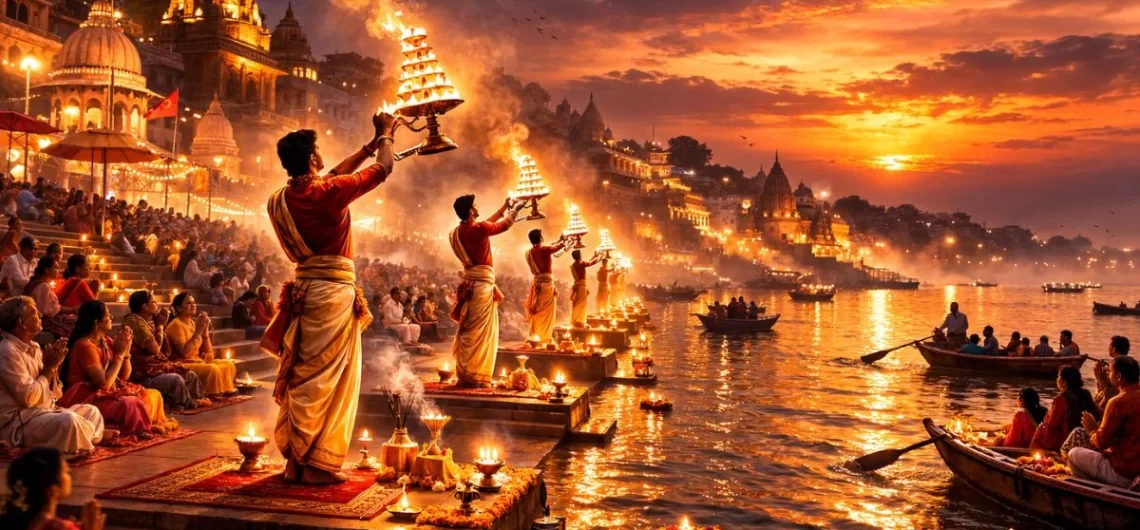
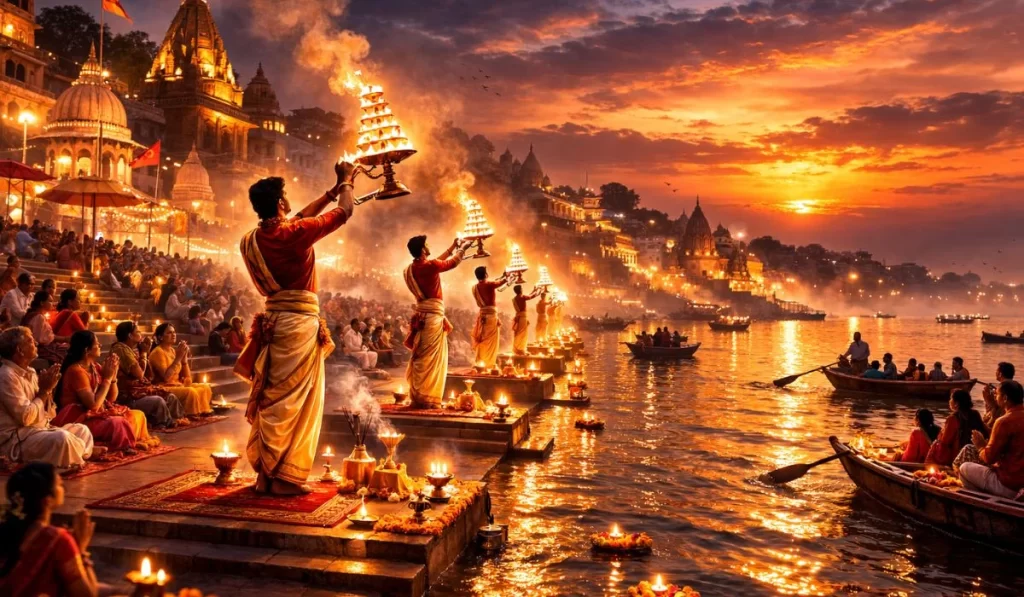
5:30 PM – Evening Ganga Aarti at Dashashwamedh Ghat. As the sun begins to set, make your way to Dashashwamedh Ghat (a short walk from the city center). By 6:30–7:00 PM nightly, a spectacular Ganga Aarti unfolds: 9 priests on raised platforms simultaneously swirl flaming lamps and recite mantras, surrounded by rhythmic drumbeats and conch-shell blasts. The atmosphere is electric and emotional, and it’s a Varanasi “must-do.” A popular tip: get there around 5:30 to claim a front-row spot on the steps, or even book a late-afternoon boat ride so you can watch the ceremony from the water. (You may also see local stalls selling rose petals, incense, and small diyas to float on the river afterwards – it’s a powerful moment to set a candle adrift, but carry a bottle of water or sanitizer for a quick hand-wash first.)
Priests perform the nightly Ganga Aarti at Dashashwamedh Ghat as dusk falls. The sky turns crimson and the river reflects dancing oil-lamp light – a mystical, unforgettable ceremony.
7:30 PM – Evening in Old City. After Aarti, the ghats and lanes near Chowk spring back to life. Locals stroll by, young men sip lassis, and shops sell paan (betel leaf), rabri (sweet milk pudding) or malaiyo (a frothy winter-only sweet). You’re in the heart of Banaras now – enjoy some street snacks from the stalls (tamatar chaat, palak patta chaat or spicy pani puri), or relax at a rooftop cafe overlooking the river. Dinner can be another casual affair – for example, grab a thali dinner near Dashashwamedh or some kebabs and pulao at a popular spot like Deena Chaat Bhandar.
Then retire early to your hotel (you’ll want rest for Day 2). Staying near the ghats makes all these activities painless: in fact, many travelers swear by lodging within 1 km of Dashashwamedh Ghat. That way you can walk everywhere. Note that cars and autos cannot enter the narrow lanes near the water, so you’ll often walk or use cycle-rickshaws for very short hops.
Planning a 2 Day Trip to Varanasi? Get a Personalized Itinerary & Local Support
Perfect schedule • Guided experiences • Hassle-free travel
Plan My Varanasi TripWant help customizing this itinerary? Our local team can assist.
Day 2: Morning Sarnath & More of Varanasi
6:00 AM – (Optional) Morning Aarti at Assi Ghat. If you’re up for an early start, catch the dawn Aarti at Assi Ghat. It’s far less crowded than the evening ritual, with a peaceful, meditative feel. One traveller recommends reaching around 5:30 AM for the 6:00 AM ceremony; the priests’ soft chants echo on the quiet river, and the sky turns pale gold as you pray. (If you’re tired, you could also sleep in and skip this – you already did a sunrise boat yesterday.)
7:00 AM – Boat Ride or Stroll. After the Aarti, you have time for another Ganges cruise if you missed it Day 1. A sunrise or morning boat (from Assi or a private ghatside operator) offers a serene counterpoint to the evening one. Seeing the city bathed in gentle light is different from the fiery sunset scene. Either way, you’ll be back by 8:30 for breakfast.
8:30 AM – Breakfast (Chaat and Lassi). Today try some typical morning chaat and lassi. The tamatar chaat (spiced tomatoes with crispy dough) at Kashi Chaat Bhandar is legendary; this place near Dashashwamedh draws crowds long before noon. Also sip a thick curd lassi topped with malai (cream) – the creamy taste of Banaras.
9:30 AM – Drive to Sarnath. After breakfast, hop in a hired car or taxi (apps like Ola/Uber work) for the 10–15 km trip to Sarnath (about 30–40 minutes). Sarnath is a peaceful contrast to Varanasi’s frenzy. This is where Gautama Buddha gave his first sermon, so it’s a major Buddhist pilgrimage site.
10:30 AM – Explore Sarnath. Visit the Dhamek Stupa (a massive stone relic tower from 500 AD) and the deer park where Buddha taught. Stop by the Sarnath Archaeological Museum to see the original Ashoka Pillar lion capital and ancient Buddha statues. Entry fees are negligible (usually ₹5–10). If you have time, peek at the Mulagandha Kuti Temple (built by Japan, with frescoes of Buddha’s life) and several international temples (Japanese, Tibetan, Thai, etc.). Plan to finish by 12:30 PM or so.
1:00 PM – Return to Varanasi & Lunch. Head back to Varanasi city for lunch around 1:30. You could eat on the way or back in Banaras. By now you’ve walked miles, so it’s a good idea to rest a bit after lunch.
3:00 PM – Backstreets & Temples. Use the afternoon to see anything you missed. A few suggestions:
- Bharat Mata Temple (Mahatma Gandhi Kashi Vidyapeeth campus) – a unique marble map of undivided India is enshrined here. It’s free and worth a quick stop for the photo-ops.
- Tulsi Manas Temple – a red temple dedicated to Lord Rama, built where the poet Tulsidas wrote the Ramcharitmanas.
- Sankat Mochan Hanuman Temple (aka the Monkey Temple) – an energetic afternoon spot often full of screaming monkeys (kids love it).
- If shopping interests you, wander the markets near Godowlia: Banarasi saris and gold work are the pride of the city. (Remember to bargain hard – vendors often expect haggling down to ~50% of the first price.)
If you have no specific plan, just getting lost is fine – Varanasi’s alleys themselves feel like a living museum. In fact, the writer Karen MacRae advises: “simply walking around this indescribable city and its age-old, maze-like streets is something that must be experienced”. Almost every path leads back to the river, so you won’t really get lost forever.
5:30 PM – Sunset Boat or Aarti (Optional). You’ve already seen the main Aarti once, so you have flexibility. For a different view, you could take a sunset boat cruise (similar cost to the morning ride). From the river you’ll watch the ghats fade to twilight – many travelers say the Aarti viewed from a boat is unforgettable. If you prefer land, return to Dashashwamedh Ghat by 6:30 PM for one more Aarti (it’s the same ceremony, but now you’re an old friend of the river). Otherwise, relax at your hotel or a ghat café as the day ends.
7:30 PM – Dinner and Reflections. For your final dinner, go all out on Banarasi specialties. Try a thali feast or munch through a street food hop at Chowk Bazaar. You can even sample paan (betel leaf with sweet fillings) which locals chew after meals for digestion and breath-freshness. As you eat, reflect on this whirlwind two days. Varanasi is a city that lingers in the heart: its scents of incense, sounds of temple bells, and the sight of thousands of oil lamps on the river often leave visitors feeling humbled or inspired. Indeed, one traveler calls Varanasi “the culture capital of India,” where “every two seconds your eye will catch something new and exciting.”
Planning a 2 Day Trip to Varanasi? Get a Personalized Itinerary & Local Support
Perfect schedule • Guided experiences • Hassle-free travel
Plan My Varanasi Trip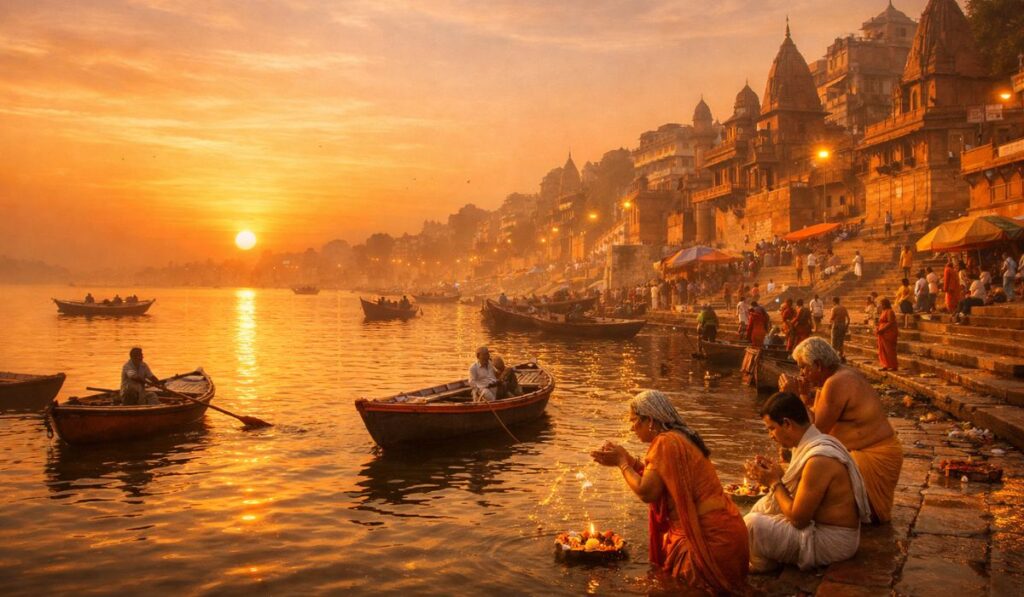
Best Time to Visit
For weather and festivals, plan your trip between October and March. Almost every guide agrees this is Varanasi’s pleasant cool season. Days are warmish (25–30°C) and nights cool, perfect for walking the ghats. Major festivals happen in this window too (Diwali, Dev Deepawali, Holi, Maha Shivaratri), making the city especially vibrant. By contrast, April–June can be brutally hot (40+°C) and July–September brings heavy monsoon rains. So pack light layers and an umbrella or rain jacket if you’re off-season, but expect the best conditions in winter.
Explore curated Varanasi travel packages if you want help with planning, transport, and guided experiences.
Getting Around Varanasi
Varanasi is compact but chaotic. In the old town (around the ghats) the fastest way is usually on foot or by cycle-rickshaw. Autos (three-wheeled tuk-tuks) ply the larger roads but cannot enter the narrow alleys near the ghats. Indians often use app-based cabs (Ola/Uber) or hire a full-time driver for the day. For example, locals say an Ola is handy for longer trips (like to Sarnath or the airport).
- From the Train Station: Varanasi Junction (Varanasi Cantt) and Banaras Railway Station both sit 3–4 km from the ghats. Use the prepaid taxi stand: a fixed-price auto-rickshaw or cab to the main ghats costs about ₹100–150. From the airport (Lal Bahadur Shastri Airport, 18 km away), taxis are easy to hire as well.
- On the Ganges: Don’t forget the river itself as “transport”. Even if not doing a full tour, a short gondola-style boat trip (₹50–100 for 30 min) can jump you across the water or to the Uttar Pradesh side. But mainly, boats are for sightseeing.
- Walking Tips: Wear comfortable shoes – there are a LOT of steps and uneven stones. Locals recommend carrying small change for stairs entrances, and a plastic bag for trash (bins are rare). Also bring a reusable water bottle (buy bottled water; avoid tap/Ganges water at all costs).
What to Eat in Varanasi
Varanasi is a street-food paradise. As one Viator guide points out, Banaras is famous for its chaat (savory snacks). In particular:
- Kachori-Sabzi: The classic fried pastry stuffed with lentils, served with spicy potato curry. Get it for breakfast at places like Ram Bhandar or Deena Chaat Bhandar.
- Tamatar Chaat & Chura Matar: Tomato chaat (a tangy, raw tomato dish) and chura-matar (crushed rice with green peas) are local favorites at Kashi Chaat Bhandar.
- Lassi: A thick yogurt drink, often served in clay bowls or steel tumblers. The word “Banarasi lassi” is famous – look for a spot like Blue Lassi Shop or local sweet shops.
- Malaiyo (winter only): If you visit in winter (Dec–Feb), seek out Malaiyo – a frothy saffron-milk custard. Chaukhamba Gali is known for selling it.
- Rabri, Jalebi, & Paan: For dessert, try creamy rabri (milky pudding) or perfectly crisp jalebi (syrupy coils). Many folks end their Banaras meal with paan (betel leaf chew).
In short, eat where the locals eat. Street stalls are generally safe if busy, and you’ll sample the true soul of the city. (Tip: If unsure, choose vegetarian options – meat is less common here, and veg dishes are truly flavorful.)
Where to Stay
To maximize time, choose lodging in the old town near the main ghats. Areas around Dashashwamedh, Assi, or Shivala Ghat are popular choices. You’ll be in walking distance of most sites, which means you can walk back after late dinners or Aarti services. As one traveler advises, “book your stay within walking distance (around 1 km) of Dashashwamedh Ghat” for convenience. Guesthouses, budget hotels and mid-range hotels all line the riverside and nearby lanes. Even if cheaper hotels are on slightly remote roads, ensure your taxi driver can drop you at a nearby intersection – remember many narrow alleys are pedestrian-only.
- Budget Travel: Dorms and basic guesthouses near the ghats can be as low as ₹300–500 per night. (Example: Suraj Guest House and Ganpati Guest House are well-rated budget picks on older reviews.) These often include free breakfast.
- Mid-Range: A clean double room in a 3-star hotel with AC, river views, and breakfast might cost ₹2,000–4,000 per night. These often have rooftop cafes for Ganges views.
- Luxury: If you splurge, some high-end hotels across the river or in Cantonment area offer resorts and heritage stays (though you’ll spend more time in traffic getting downtown).
Booking ahead is wise, especially in peak season. Also, check if your hotel can help arrange an early boat or guide – many are happy to help foreign guests set these up.
Cultural Etiquette & Tips
Varanasi is deeply traditional, so a respectful attitude goes a long way. Here are some key dos and don’ts:
- Dress Modestly: Wear clothes that cover your shoulders and knees, especially when entering temples. Avoid shorts/tank-tops in the old city.
- Remove Shoes: At temples and many ghats, leave your shoes outside. (Tip from locals: wear flip-flops so you can easily take them off and on.)
- No Photos of Cremations: You may see funeral pyres at Manikarnika Ghat. By tradition it’s forbidden to photograph or interrupt the rituals. Stay a respectful distance (some ghats are reserved for photography, others are strictly no-trespassing).
- Mind the Cows: Cows roam freely and are sacred. They will push through crowds unpredictably. Never block them or tease them. Give them plenty of space and don’t be alarmed if they brush past.
- Accept Dust and Crowds: Varanasi is not a sanitized resort. There is litter on streets and pollution in the air. Locals suggest carrying hand sanitizer and toilet paper (public bathrooms are rare). Try not to freak out – consider it part of the experience.
- Stay Hydrated & Safe: The sun is strong. Carry sunscreen and a hat. Drink plenty of bottled water and avoid river water entirely (it’s heavily contaminated). Also pack any medicine or rehydration salts just in case – the local chai and street snacks might be spicy for you.
- Haggling: Bargaining is expected in shops and with rickshaw drivers. As a rule, start at 50% of the asking price. One tip: never pay the first price; “bargain to half the price they quote”. Many hotels and drivers will also quote tourist rates, so confirm fares or use a meter/app.
- Beware Scams: A well-known one is the “burning ghat” scam. Some guides or boatmen will offer to take you to “witness a sacred cremation” and then demand big donations. Avoid any guide who pressures you into this. Stick to official ghats for watching Aarti.
- Local SIM & Cash: Wi-Fi can be spotty, and narrow lanes cut off data. It’s wise to buy an Indian SIM card for your phone for easy navigation and bookings. Keep plenty of cash (small bills) on hand – many small vendors don’t take cards. ATMs are available downtown but can run out.
Common Mistakes to Avoid
- Overpacking the Day: Trying to see all the 80+ ghats or squeeze in too many temples in one day leads to exhaustion. Focus on highlights instead.
- Skipping the Plan: Thinking you can “wing it” usually fails. As one guide bluntly warns: Varanasi is not a backpacker-friendly place to improvise. Book at least your first-day hotel and boat ride in advance.
- Ignoring the Heat: Even in winter, daytime sun is strong. Many visitors faint in crowds. Take breaks in shade or back at the hotel during mid-afternoon.
- Being Unaware of Crowds: Major sights have lines. For instance, Kashi Vishwanath in late afternoon can have long queues; plan temple visits for early morning or late evening.
- Trusting Random Touts: If anyone “offers help” unasked – a guide, a boatman, or a driver insisting on a special tour – be polite but firm. Always agree on prices upfront. If in doubt, walk away.
- Disrespecting Local Customs: Wearing shoes in temples, taking flash photos of worshippers, or barging into a prayer ceremony can deeply offend locals. Watch what people do and follow suit.
Practical Travel Tips
- Language: Hindi is dominant, but you’ll find “translator apps” useful. In the old city, shopkeepers often know a few English phrases. Learning to say “Namaste” (hello) and “Dhanyavad” (thank you) will endear you.
- Timing: In Varanasi, many shops and temples open by 6–7 AM. Most close from 1–4 PM (the afternoon lull), then reopen until late evening. Plan meals or rest accordingly.
- Safety: Petty theft is rare, but keep valuables zipped up since the streets get very crowded. Women should be cautious about strange men – common courtesy in any big city. Locals say crime rates are “very low”, but always use hotel safes for passports.
- Currency: The local currency is Indian Rupees (₹). While there are major ATM stands near the ghats, carrying enough cash avoids scrambling. Use small notes for shopping; no one has much change.
- Climate Gear: In winter, nights can dip to ~10–12°C, so pack a light sweater. In summer, lightweight cotton and maybe an umbrella (monsoon showers) are needed.
- Learn Local Flow: Don’t be surprised by the chaos. Horns will blare, cows will saunter, and old men will stick out their tongue to sniff it at you (a mark of respect in Banaras!). Try to keep a sense of humor and curiosity – Varanasi is as alive in its chaos as it is in its serenity.
Budget Overview (2 Days)
- Budget Traveler: If you stay in dorms/cheap guesthouses (₹300–500), eat street food (₹50–100 per meal) and skip paid tours, you can see the city for roughly ₹3,000–5,000 per person (about $40–60 USD) over 2 days. For example, a kachori breakfast ~₹50, a street lunch ~₹100, a boat ride ₹200, plus minimal transport and cheap lodging.
- Mid-Range Traveler: A comfortable hotel (₹2,000–4,000/night), some restaurant meals (₹300–500 each) and a few paid experiences (guided temple entry, driver, etc.) will total around ₹8,000–15,000 ($100–200) per person. This covers a mix of street snacks and sit-down meals, AC taxi rides, and entry fees/tips.
- Extras: Boat rides are ~₹200 per person for 90 min, auto-rickshaw rides a few hundred rupees, and temple entries like Kashi Vishwanath are free (but offerings are expected). Tipping is customary: round up cab fares, give 10–20% in restaurants if you liked service, and offer a few rupees to boatmen or guides.
(These are rough estimates. Varanasi is generally economical, but costs can climb fast at touristy spots or high-end lodgings. Always agree prices in advance.)
Reflective Conclusion
Two days in Varanasi is like flipping through the pages of India’s deepest storybook. In the short span of 48 hours you’ve seen sunrise ablutions and sunset aartis on the Ganges, conversed with brahmin priests and saffron-clad sadhus, and felt the pulse of life and death on every step of the ghats. While 2 days just scratches the surface, it will leave you with lasting impressions – the smell of incense, the sound of temple bells, and the flicker of oil lamps on water. As one guide remarked, here “history and culture intertwine seamlessly” and every corner tells a story. You may leave Varanasi exhausted and awestruck, carrying home more questions than answers, but also a profound sense that you’ve touched something eternal. The real journey continues afterward, as the memory of Banaras – India’s oldest living city – grows within you.
FAQ
Is 2 days enough time in Varanasi?
Many travelers agree that two full days lets you cover the main sights: a sunrise Ganges boat ride, the Kashi Vishwanath temple, a city-walk, Ganga Aarti, and even a quick trip to Sarnath. One travel Q&A notes “you’ll need at least one full day” for Varanasi and suggests giving yourself two or three days if you can. In practice, 2 days will feel full but rewarding if you plan efficiently.
What are the absolute must-see activities?
Don’t miss the evening Ganga Aarti at Dashashwamedh Ghat (a flame-and-chant ceremony at sunset) or a sunrise boat ride on the Ganges. Other top experiences include visiting the Kashi Vishwanath Temple, strolling the ancient ghats, sampling Varanasi’s street food, and (if time allows) a trip to Sarnath. These define a classic Varanasi trip.
What should I eat in Varanasi?
Varansi’s street food is famous. Try kachori-sabzi (fried lentil pastry with potato curry) for breakfast at Ram Bhandar, and chaat specialties like tamatar chaat or chura-matar at Kashi Chaat Bhandar. Don’t miss a thick lassi (yogurt drink) from the old city, and sweets like jalebi or malaiyo (in winter) for dessert. The city is known as a chaat capital, so let the local snacks guide your meals.
What is the best time to visit Varanasi?
The ideal months are October through March. The weather is cool and festivals abound. In summer (April–June) it’s very hot, and the monsoon (July–September) brings heavy rain. So if possible plan your 2-day trip in the winter season.
How do I get around Varanasi?
In the old city, walking and bicycle-rickshaws are easiest. Autos (tuk-tuks) operate on bigger roads. For day trips (like to Sarnath) or airport transfers, book a car or use an app taxi. Varanasi’s airport (Lal Bahadur Shastri Airport) is about 18 km from the city, and trains arrive at Varanasi Junction which is ~3 km from the ghats. From either station or airport, prepaid taxis (~₹150) can drop you near Dashashwamedh Ghat.
What are common mistakes travelers make in Varanasi?
Frequently, visitors underestimate the intensity and come unprepared. A common warning is to plan ahead – Varanasi’s chaos means open-ended wandering can go awry. Other missteps include not dressing modestly (especially in temples), forgetting that shoes must come off inside shrines, and getting lured by “guides” into fake donation schemes at burning ghats. Also, don’t assume you’ll see cremations – many visitors don’t; but be prepared emotionally if you do. Finally, never stay up too late the first night – jet lag plus Varanasi’s sensory overload is a recipe for fatigue!
Is Varanasi safe for tourists?
Varanasi is generally safe for foreigners who use common sense. Street crime is low, but always be aware of pickpockets in crowds. Women traveling alone should dress conservatively and avoid very late-night wandering. Use only official autos, negotiate fares ahead (or use apps), and politely decline any pushy touts. Overall, the biggest “risk” is cultural shock – Varanasi is a raw, visceral place. Travelers advise keeping an open mind, staying patient in lines, and immersing respectfully.
Can foreigners visit the Kashi Vishwanath Temple?
Yes – the inner sanctum of Kashi Vishwanath is open to all faiths (though most worshippers are Hindu). Note the strict rules: you must deposit cameras/phones in lockers, remove shoes, and go barefoot. The darshan lines can be long, so plan accordingly. (Also, the temple is free, but small offerings are customary.)
How far is Sarnath and how do I get there?
Sarnath is about 10–13 km northeast of Varanasi city. It takes roughly 30–45 minutes by taxi. The recommended way is to hire a car or tuk-tuk for the round trip. Public buses also run, but they are slower and less convenient. Inside Sarnath, you can walk or hire a local guide for a small fee.
Each answer above is based on travelers’ experiences and current guides. With this itinerary and tips in hand, you’re ready to explore Varanasi’s wonders in two unforgettable days. Enjoy the journey, and let Varanasi’s timeless rhythms guide you!
✨ Plan Your Varanasi Trip Better — Helpful Guides
If you’re planning your visit in more detail or want to understand the city beyond this itinerary, these guides can help you make smarter decisions and travel with more confidence. From deciding how long to stay to understanding safety and the best season to visit, these resources cover the most common questions travellers have before arriving in Varanasi.
- 👉 How Many Days Are Enough for Varanasi? A Simple Travel Planning Guide — If you’re still unsure whether two days is enough or wondering how to extend your trip, this guide breaks down ideal trip durations and travel pace.
- 👉 Best Time to Visit Varanasi: Weather, Festivals & Travel Tips (2026) — Learn about the best months, seasonal experiences, and major festivals so you can plan your trip at the right time.
- 👉 Is Varanasi Safe to Visit? A Clear & Honest Safety Guide for Tourists (2026) — Understand practical safety tips, local advice, and what to expect as a visitor.
- 👉 Is Varanasi Safe at Night? What Tourists Should Know (2026) — Helpful insights if you plan to explore the ghats or attend evening rituals after dark.
Exploring these guides will give you a deeper understanding of Varanasi and help you travel more comfortably and confidently.

Comments